

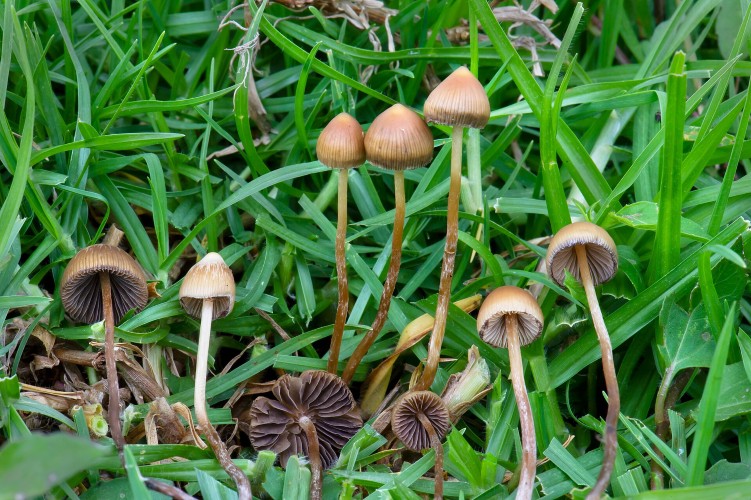
Psychedelic mushrooms, cannabis, ayahuasca, LSD, and peyote have been used to enhance spiritual practices for years across America.
Table of Contents
The religious importance and spiritual experiences of these entheogens transcend time, culture, place, and beliefs.
Many of these communities still face legal challenges, as psilocybin is still federally illegal. Unfortunately, no religion has received federal protection for its consumption yet. Many are forced to rely on legal gray areas and local legal protection.
Native American Use of Peyote
For over 5,000 years, peyote has been a sacred plant to Native American tribes. In 1990, the United States Supreme Court ruled that peyote could be banned by states, even for Native American religious purposes.


This sparked outrage and advocacy efforts, leading to the signing of the Religious Freedom Restoration Act (RFRA). The law expanded protections for religious exercise by requiring the government to justify restrictions using a compelling interest pursued through the least restrictive means possible.
In 1994, amendments to the American Indian Religious Freedom Act were passed by Bill Clinton to allow religious use of peyote by natives specifically. The Native American Church (NAC), with about 250,000 practitioners, represents and defends the right to practice sacramental peyote. Their goal is “to bring people closer to their creator and facilitate healing and fellowship.”
Ayahuasca Churches in the US
União do Vegetal (UDV) is a Christian Spiritist religion originating from Brazil and founded in 1961. They consume ayahuasca to achieve religious ecstasy and bring practitioners closer to God.
After the federal government seized 30 gallons of ayahuasca, UDV sued them based on the RFRA. In 2006, the US Supreme Court permitted the UDV to use ceremonial ayahuasca.

Santo Daime was founded in the 1930s in Brazil and also contains Christian imagery. They can legally consume ayahuasca at specific locations as well, utilizing the UDV ruling.
In addition, in 2024, the Church of the Eagle and the Condor received federal protection to drink ayahuasca as an essential sacrament in the US. This was the first non-Christian-associated religion to receive this exemption.
In 2025, the Church of Gia became the first to receive an exemption for the consumption of ayahuasca by petitioning the DEA instead of suing it. The same year, after legal perseverance, the Church of Celestial Heart became protected for its religious use of ayahuasca as well.
The Psychedelic Church of Ambrosia
The Church of Ambrosia claims to be the largest psychedelic church. They provide access to entheogenic plants for spiritual exploration. They believe each person has the right to “seek the divine through direct experiences.”
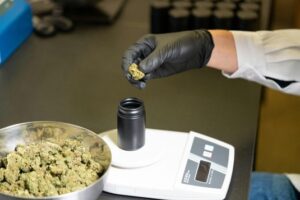
Its main location is Zide Door in Oakland, California. Their primary sacraments are psilocybin mushrooms and cannabis. The Church of Ambrosia’s theology includes the controversial “Doctrine of Religious Evolution.” It proposes that psilocybin mushrooms catalyzed human evolution roughly 2.5 million years ago.
Founder David Hodges had spent over a decade involved in cannabis legalization battles. In 2019, he founded the Church of Ambrosia, which now has over 137,000 members.
Critics question the religious authenticity of the church and see it as little more than a psychedelic dispensary. However, many seem to be genuine believers in psychedelic spirituality.
Sacramental Psilocybin and Psychedelics
Psanctuary, Sacred Garden Community, and the Holy Trinity of Divine Church are examples of interfaith churches that utilize mushrooms as a sacrament for spiritual exploration as well. Each church has its own ideologies, perspectives, and support systems.
Rising Phoenix Entheogenic Temple was founded in 2024 in San Francisco. It now has two new temples as of 2025.
Novel psychedelic spiritual communities are all over the US. Over 250 psychedelic churches have been identified by J. Gordon Melton and John Rapp in 2025. As new communities, beliefs, and laws are developing and the definition of religion continues to be debated, the landscape of psychedelic religions in America is sure to keep evolving.
American Psychedelic Leaders
One of the biggest early American proponents of the spiritual use of psychedelics was Timothy Leary. In 1960, while on a trip to Mexico, he tried Teonanácatl, or “flesh of the gods”, now known as Psilocybe Mexicana.
As a Harvard psychologist, he worked on multiple projects studying the therapeutic effects of psilocybin and LSD. He explored their therapeutic potential, from reforming convicts to treating alcoholism.

A leading promoter of the benefits of psychedelics, Leary started his own religion for the sacramental use of entheogens, The League of Spiritual Discovery (LSD). He believed these substances should be used as a tool for spiritual and self-discovery.
Richard Alpert, who changed his name to Ram Dass, worked closely with Timothy Leary. He was inspired by LSD, an ego-death experience, and a desire for deeper peace to go to India. As a spiritual teacher, he became a bridge between the psychedelic culture of the West and the spiritual traditions of the East. He outlined his path to enlightenment in his book, Be Here Now.
Terence McKenna was another influential figure in the theology of psychedelic spirituality in America. He traveled to South America and studied various psychedelics as well as shamanism in the Amazon.
McKenna was a large proponent of the depth and spirituality behind psychedelics such as psilocybin and DMT. He popularized the stoned ape theory as well.