




If New Jersey’s cannabis lounge operators want a tested business model where no food or alcohol is sold, they should study the hookah lounge.
Table of Contents
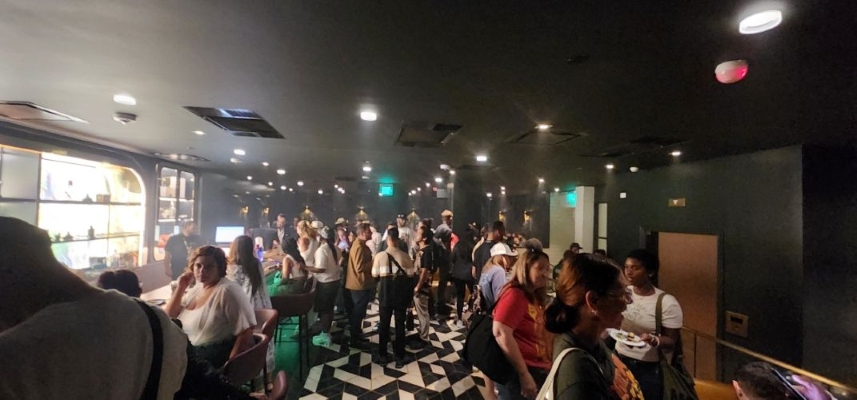
After the Cannabis Regulatory Commission (CRC) approved the first endorsements in July 2025, legal NJ cannabis lounges began welcoming guests in Atlantic City and Merchantville at High Rollers, Sunnytien, and Gynsyng. Urb’n dispensary Newark opened its cannabis consumption lounge earlier this year, in February 2026.
But for the operators building these new spaces, the challenge is real.
The rules are strict. Legal NJ cannabis lounges must be attached to a licensed dispensary. Also, they cannot sell food, soft drinks, or alcohol. Plus, indoor spaces must be separated from the retail floor, ventilation plans have to be submitted with the application, and towns can ban them outright.


A social smoking venue that can’t sell drinks or dinner sounds like a business model with one hand tied behind its back. But there’s an industry that has been running exactly that model in America for more than two decades.
The Original Legal Indoor Smoking Venue
When indoor smoking bans swept the country in the 2000s, hookah lounges survived through narrow tobacco-establishment exemptions written into state smoke-free air laws.
To qualify, most had to prove the majority of their revenue came from tobacco. That meant no kitchen and no bar. Sound familiar?
Hookah lounges didn’t just survive that constraint. They turned it into a business model. The ways they did it map almost one-to-one onto what NJ cannabis lounges are now allowed to do.

Lesson One: Sell the NJ Cannabis Lounge Session
A hookah lounge doesn’t really sell tobacco. It sells an experience measured in time. A prepared hookah is a 60-to-90-minute session, tended by staff who swap charcoal and check the smoke. The product is the anchor. But the revenue is in the hospitality, the ambiance, the music, the service, the reason to stay for a second bowl.
That’s the model cannabis lounges need.
Operators who think of the lounge as a place where a purchase happens will struggle. But operators who think of it as a place where an evening happens will build regulars. According to Hookah Vault, a California hookah retailer, the lounges that thrive are the ones that treat preparation and table service as the product, a lesson two decades in the making.
Lesson Two: The Food Workaround Is a Feature
NJ’s rules prohibit lounges from selling food. But patrons may bring their own or have food delivered, where the municipality allows it. Hookah lounges have been living in exactly this gray space for years. They are often near late-night restaurants, and keep menus from neighboring kitchens on the tables.
So building informal delivery partnerships that keep guests seated without putting the lounge’s name on a food license is a good idea.
For a New Jersey cannabis lounge, the playbook is to locate near food, make ordering-in frictionless, and let the neighboring restaurants become allies.
Lesson Three: Ventilation Is the License
The CRC requires ventilation plans as part of every consumption area application, and indoor lounges must be structurally separated from the dispensary. This is the arena where hookah lounges have the deepest engineering experience of any hospitality category. For decades, they have designed powerful systems that keep rooms full of smoke comfortable, presentable, and compliant with inspection.
Cannabis operators drawing up their Standard Operating Plans (SOPs) would do well to consult the people who have addressed smoke-filled-room issues. What a hookah lounge figured out about airflow, seating layout, and session hygiene is directly transferable, down to the disposable mouthpieces that became standard across the hookah industry long ago.

Lesson Four: Social Smoking Works Without Alcohol
Perhaps the most encouraging lesson is the simplest one. The persistent worry about cannabis lounges is whether a social venue can draw crowds without a bar. Hookah lounges answered that question years ago. Most operate without liquor licenses, and they fill up anyway, especially with 21-to-35-year-olds and communities that don’t drink for cultural or religious reasons.
The parallel runs deeper than economics. Hookah culture is built around unhurried, communal consumption. It’s a shared centerpiece, conversation, and no pressure to keep ordering rounds. That’s the social contract cannabis lounges are trying to establish. It’s proof that New Jersey’s no-alcohol rule isn’t a death sentence.
The smartest move a New Jersey cannabis lounge operator can make this year might be an unglamorous one. Spend a Friday night in a busy hookah lounge, watch how it works, and take notes.