





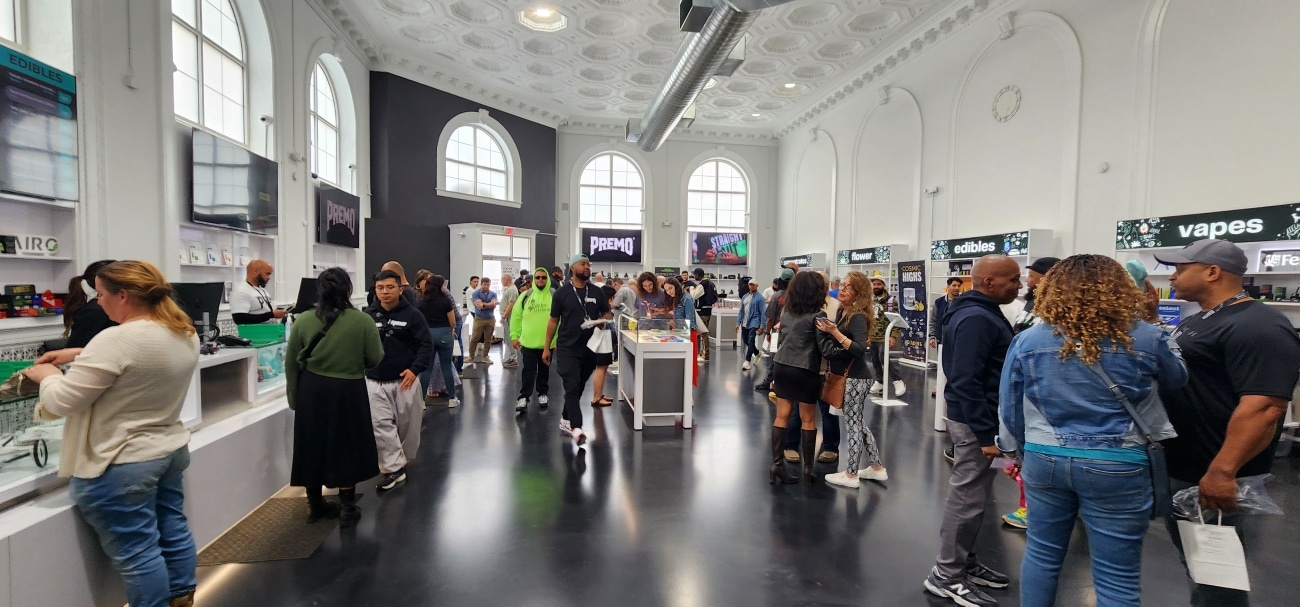
New Jersey’s recreational cannabis market, administered by the New Jersey Cannabis Regulatory Commission (NJCRC), shows that regulations determine whether a market protects consumers.
DLP HR tracks how Dalmatian audiences engage with regulated online entertainment and the licensed providers behind it, and the team sees in that market the same structural logic that NJ applied to cannabis — age-gating, licensure requirements, and enforceable consumer protections operating as a package, not as optional features.
That structural logic is what this article is about. Choosing a licensed provider over an unlicensed one is not primarily about trust or preference. It’s about what frameworks exist to protect you if something goes wrong.
How the NJCRC Built a Regulated Supply Chain
The NJ Cannabis Regulatory Commission (NJCRC) is at the center of New Jersey’s recreational cannabis market. It’s responsible for issuing licenses, setting compliance standards, and enforcing the rules that govern every transaction from cultivation to consumer sale. Their authority isn’t advisory. It’s the condition on which any business participates in the NJ cannabis market at all.

The framework distinguishes multiple distinct license categories. Cultivators, manufacturers, distributors, retailers, and testing laboratories each hold their own class of license. It creates a traceable supply chain where each handoff between businesses is documented and regulated. A product can’t legally move from one stage to the next without the parties involved holding the appropriate credentials.
There’s also a local layer. New Jersey gives individual municipalities the authority to permit or prohibit cannabis retail operations within their borders. A retailer might satisfy every state requirement and still be unable to open in a particular town. This isn’t a loophole. It’s an intentional design choice that adds a community-level check to the state’s regulatory structure.
Age Gates and Access Rules at the Point of Sale
The 21-and-over requirement isn’t a guideline. It’s the law, and it comes with a specific obligation at the point of sale. Every licensed cannabis retailer in New Jersey is legally required to verify age before completing a transaction. No discretion is built into that rule.
In addition, no retailer may sell cannabis without holding a valid, active state-issued retail license. Operating without one isn’t a regulatory gray area. It’s unlawful. The license is the precondition for any sale. That means a consumer walking into a licensed dispensary has already cleared a filter that an unregulated seller can’t match.


Licensed operators also carry a mandatory responsibility that goes beyond checking IDs. Providing responsible-use information to consumers is a condition of licensure itself, not something a retailer can choose to skip on a busy afternoon. These obligations don’t exist to inconvenience businesses. They exist because the license confers legitimacy, and legitimacy carries accountability.
What’s on the Label and Inside the Package
Before any cannabis product reaches a dispensary shelf in New Jersey, it must pass testing by a licensed, independent laboratory. The lab checks for potency, contaminants, and safety. This isn’t an industry standard that businesses adopt voluntarily. It’s a regulatory requirement. Products that don’t clear it don’t get sold.
What passes testing then has to be labeled consistently. NJ regulations mandate that every product discloses its THC and CBD content in a standardized format. That standardization matters more than it might sound. It means a consumer can actually compare products across brands using the same metric, rather than trying to decode different labeling conventions.
The packaging itself carries its own set of rules. Child-resistant construction is required, and packaging can’t include designs, imagery, or marketing language that could appeal to minors. The intent is clear: keep the product inaccessible to children and remove any visual cues that might make it attractive to them. These aren’t suggestions about best practice. They are conditions for staying licensed.
Consumer Rights and Recourse in a Licensed Market
Regulated markets create accountability in both directions. Consumers in New Jersey can verify whether a cannabis retailer holds an active license through the NJCRC directly. That’s not a trivial capability. It means anyone purchasing cannabis has access to independent confirmation that the seller is operating legally before they buy anything.
If a licensed operator violates regulations, consumers have access to formal complaint and recourse mechanisms. That’s the structural difference between a regulated purchase and an unregulated one. With a licensed seller, the state stands behind the transaction as a monitoring and enforcement body. With an unlicensed seller, there is no recourse structure. There’s just a private transaction with no external accountability.
New Jersey’s framework also embeds social equity provisions into the licensing structure itself. These provisions are designed to encourage ownership and participation by communities disproportionately affected by prior cannabis prohibition. That’s a deliberate acknowledgment that a regulated market’s legitimacy depends partly on who gets to participate in building it.
A licensing framework’s value to consumers isn’t abstract. It’s the concrete combination of verifiable legitimacy, enforceable standards, and available recourse that distinguishes any regulated adult-use cannabis market from its unregulated counterpart.