




Drug cases are significantly impacted if a constitutional violation by a police officer occurs during the process of stopping an individual who is innocent until proven guilty.
According to the United States Sentencing Commission, drug-related offenses constituted approximately one-fourth of federal criminal case prosecutions in 2025, making drug-related crimes among the most frequent federal crimes charged. An approximate 87-month sentence was the average federal sentence imposed in such drug-related cases, showing that serious punishments were imposed.
Statewide, there are numerous drug arrests yearly, in which vehicles, homes, phones, and other private properties may be searched.
The possession, sale, manufacture, or distribution of illegal drugs are all serious criminal charges that can have life-changing consequences, according to Willoughby drug offense lawyer Matthew A. Lallo.


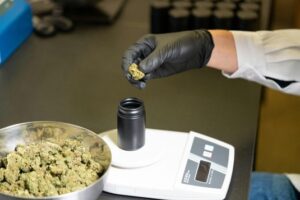
The prosecution for drug offenses is more dependent on physical evidence than many other criminal cases. The contraband, the quantity, the packaging, and the exact location of the discovery can become, in essence, the entire case.
The Exclusionary Rule
Exclusion of unlawfully seized evidence is an essential judicial response to any drug crimes and Fourth Amendment violations. Adopted in Weeks v. United States in 1914 and subsequently incorporated into state law via Mapp v. Ohio (1961), it prohibits any use of evidence illegally acquired during search or seizure operations against the criminal defendant at trial.
The rule can be expanded to violations of the Fifth and Sixth Amendments, such as coerced statements and post-right to counsel evidence.
A pretrial motion to suppress the evidence must be filed by the defendant with a clear indication of a constitutional violation and a request to exclude the evidence. In case of success, the prosecution will be prohibited from presenting such evidence at trial in its case-in-chief.


The Fruit of the Poisonous Tree: How Far the Exclusion Extends
The fruit of the poisonous tree doctrine extends the exclusionary rule’s reach past just the evidence grabbed first. Under Wong Sun v. United States, evidence taken directly is inadmissible along with further proof that comes up because of that constitutional mistake.
For example, if an unlawful stop leads to a search that reveals an address, and police later obtain a warrant to search that address and find drugs there, those drugs might be suppressed as fruit of the earlier illegal stop.
When courts look at suppression motions, they follow the causal chain starting at the first violation through each move in the investigation to decide what evidence counts for suppression.
What Makes a Search Unconstitutional: The Probable Cause Requirement
Unreasonable searches and seizures are prohibited according to the Fourth Amendment. A warrant must be backed by probable cause. When dealing with drug offenses, probable cause is a reasonable and factual assumption that there is going to be evidence or contraband.
Any search without a warrant is presumed to be illegal except when one of the following situations applies:
- Voluntary consent
- Searches made during a lawful arrest
- Probable cause searches of vehicles
- Plain-sight evidence
Traffic stops can only be prolonged within the same context. Prolonging a traffic stop to allow police officers to wait for a drug dog or to conduct a search for drugs would violate the Fourth Amendment as per Rodriguez v. United States (2015).
Terry Stops and Reasonable Suspicion in Drug Cases
Short of full arrest, police can sometimes hold a person briefly for investigation under Terry v. Ohio when there is reasonable suspicion of criminal activity.
In drug matters, Terry stops often become the first step before any bigger searches. If the first stop doesn’t hit that reasonable suspicion threshold, then any evidence that gets gathered during the stop, and afterward too, can get suppressed.


Courts generally focus on whether the officer can point to specific observable behavior, something that, at the time of the stop, reasonably suggested drug-related activity.
Being near a spot connected to older drug dealing, behaving unusually tense or jumpy when officers arrive, or even running off from police in some scenarios can contribute to reasonable suspicion under the totality of the circumstances.
But still, each of these factors alone usually isn’t enough by itself.
The Good Faith Exception and Its Limits
The exclusionary rule is not absolute in nature. The “good faith” exception, according to United States v. Leon (1984), permits the admission of evidence where law enforcement officers rely on a facially valid warrant even though the warrant itself proves to be invalid at a later stage.


There are, however, certain limitations attached to this exception.
This exception cannot be availed of if the warrant is founded on any knowingly and recklessly made false statements. Or the magistrate issuing the warrant is not neutral or detached. It also does not apply if the warrant is so obviously flawed that no reasonable police officer would have relied upon it.
Miranda Violations and the Fifth Amendment in Drug Investigations
Protection from self-incrimination in the Fifth Amendment is provided by the rules set forth in Miranda v. Arizona (1966).
Statements obtained from an individual subjected to interrogation without proper Miranda warning are inadmissible if the individual has been subjected to custody and questioning.
A Miranda violation differs from a Fourth Amendment violation because, according to United States v. Patane (2004), evidence seized because of a voluntary but unwarned statement will be admissible in court.
Why Suppression Motion Is the First Question in Any Drug Case
It is common in drug cases to have suppression issues that are often not discovered when the defendant takes an early plea bargain or the constitutional violation is not noted early on.
Searches, stops, consents, canine sniffs, and statements need to be carefully considered before planning the defense strategy.
If the evidence is going to be suppressed, then the whole case will fall apart. If it is not, then the defense will have to use the evidence available.