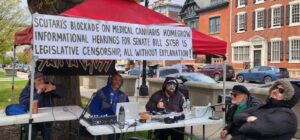



NJ Psychedelic Therapy Association (NJPTA) founder Denise Rue gave her perspective on the psilocybin shrooms research bill to Rutgers University New Brunswick student group RU Psyched.
Table of Contents
The NJ Psilocybin Behavioral Health Access and Therapy Pilot Program
She explained that the Psilocybin Behavioral Health Access and Therapy Pilot Program was signed into law by former Governor Phil Murphy (D). Its purpose is to research the safety of psilocybin therapy and its effectiveness in treatment.
Rue explained the bill appropriated $6 million among three hospitals. It will also create a Psychedelic Therapy Research Fund that can apply for grants and accept donations to fund further research.
Within 60 days of the bill, a Psychedelic Therapy & Research Advisory Board is supposed to have been established. The members would be healthcare experts, scientists, and others.

They will analyze, study, and evaluate trial outcomes. The Board is also supposed to make recommendations for future psychedelic therapy legislation, planning, and implementation.
Within 180 days, hospitals can start applying to conduct trials and report findings.
Legal Shrooms Bill Reservations
However, the bill didn’t decriminalize or legalize mushrooms. It does not create service centers like in Oregon or Colorado. Furthermore, it does not allow independent facilitators to use psychedelics for treatment legally.
Rue pointed out that although the bill may be progress, it may not have been the most effective outcome.

Research for the bill is planned to be done with synthetic psilocybin. It’s often more costly than its natural form. Synthetic shrooms also lack natural chemicals, which causes sessions to be less effective.
Rue and the NJPTA argue that “$6 million could have been better spent.”
She also believed it was not truthful to say more research is needed. Centers in Oregon have already safely served 18,000 clients.
Around December 2024, an NJ bill with much more extensive legalization, similar to that in Oregon, was supported bipartisanly. Then a new bill came along a few months later instead.
Rue called the limited bill “a delay in treatment…. As a therapist, I see all these people who could benefit.”
She argued that many people suffering from depression, anxiety, PTSD, and cluster headaches could have been prevented from having to live in pain.
Rue noted that the bill contains no language on preparation sessions.
“It’s not just like eating some mushrooms under the bleachers. It’s a process,” she noted.
“This bill has no language requiring the reporting of adverse events or noncompliance,” Rue explained, calling it a weakening of transparency.
Criticism of the bill is widespread among NJ psilocybin advocates. They believe the bill should have been closer to the original version.
Working Toward an Ideal
Rue and the NJPTA remain hopeful that the research can lead to further legislation in the future.
When asked her ideal outcome for psilocybin in New Jersey, Rue explained: “I would like for mushrooms to be legal to cultivate, to buy, and for therapists to say to a client, ‘I think you would really benefit from this.'”
She is a licensed clinical social worker who has spent over 3 years in Jamaica leading group journeys and integration sessions for hundreds of guests. Rue has been a part of over 1,500 psilocybin sessions so far.
Rutgers New Brunswick and Psilocybin
Rutgers students and faculty listened attentively to Rue. She answered questions on Ketamine and MDMA therapy, trip integration, hard trips, research, perspectives to keep in mind with psychedelics, and hopes for future legalization.
Rutgers University itself has published research on psychedelics. It has also hosted events introducing psychedelic-assisted psychotherapy for mental health practitioners.
“What we stand for is educating students about legalization, decriminalization, and the science behind psychedelics through various lenses,” Rutgers Psychedelic Society President Natala Kalinowska explained.
She explained what makes the club special.
“I think that people have really wonderful views. We have discussions that you wouldn’t be able to find anywhere else, and it’s great to see,” Kalinowska noted.
She added they have discussions, host guest speakers, watch documentaries, and bring students together. They often touch on philosophy, neuropsychology, spirituality, decriminalization, and research.
“What you guys are doing at this club is amazing. You’re educating people. That’s really where it starts, to blow up the myths,” Rue explained.