





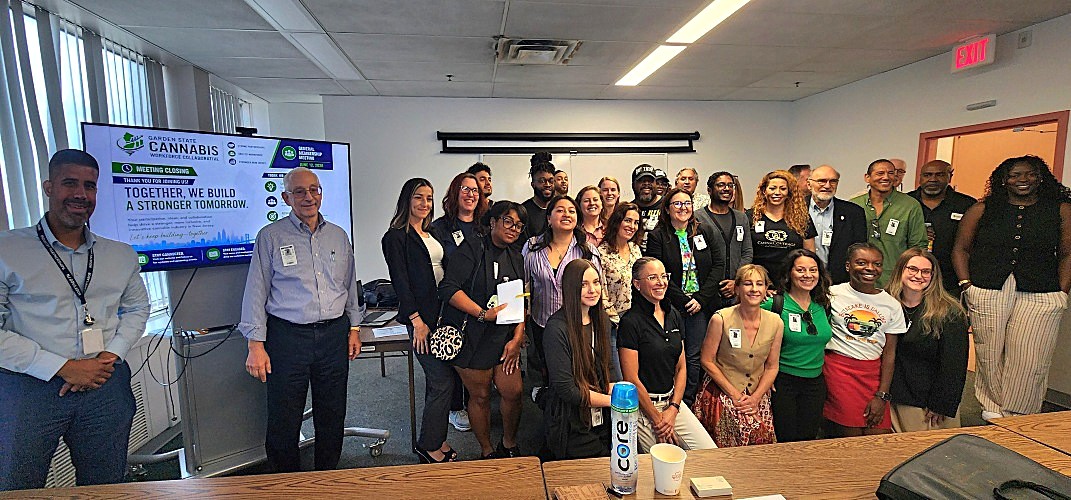
The first Garden State Cannabis Workforce Collaborative meeting of industry leaders and advocates was held in Trenton and featured lively discussions on significant labor issues in the industry.
Table of Contents
It was convened by the NJ Department of Labor and Workforce Development (NJDOL), which took the initiative to gather a room full of notable figures in Trenton.
“This is a growing economy… We want to make sure we do inflection points. Where do we improve?” NJDOL Project Manager of Industry Partnerships Jim Harris asked.
He said they’re eager to have more industry partners to support a larger ecosystem.


“Training is a critical part of this sector…,” Harris said. “There’s going to be standards….”
He noted that they planned to remain connected to industry partners and hold more meetings in the future.
NJ Cannabis Industry Statistics
“We have to be very encouraged that the State has taken an interest in this industry,” NJ Cannabis Regulatory Commission (NJCRC) Labor Director Bill Wallace said.
NJCRC Diversity and Inclusion Director Wesley McWhite said about 12,000 people are working in the licensed NJ cannabis industry.


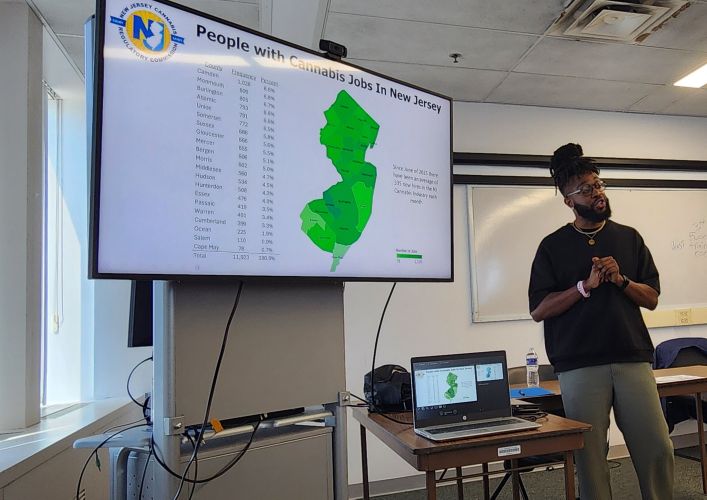
According to him, 535 people a month have been getting a job in this industry since June 2025.
“It’s roughly equivalent to a mid-sized manufacturing company,” McWhite said.
“…Almost half the industry is employed by diversely owned businesses,” he declared to applause. “…Independent companies are hiring more than… the Multi State Operators (MSOs).”
NJ Cannabis Training Academy Progress
NJ Cannabis Training Academy (CTA) Executive Director Tauhid Chappell explained their program, helping cannabis entrepreneurs via free training.
“We teach you the process start to finish,” he noted.
Chappell said they also do a lot of work helping train workers in the different sectors of the cannabis industry.
Student Voices at Rowan University
Alicia Lamplugh of Rowan University Students for Sensible Drug Policy (SSDP) introduced their group and explained their role.
“There is still a somewhat significant gap in knowledge of those seeking to enter the cannabis industry,” Lamplugh said.


“…Some of the most valuable talent… is found in our community… People who have been directly impacted by past policies,” she added.
Lamplugh said they might lack helpful information. She noted she met someone qualified to work in the industry, but didn’t know where to begin.
NJEDA Cannabis Grants Explained
Program Manager Aubrey Flanagan of the NJ Economic Development Authority (NJEDA) explained their grant and loan programs.
She noted banks are reluctant to do business with those in the cannabis industry.


“The State is the largest investor in the cannabis industry in the State, and that’s unprecedented!” Flanagan declared.
She explained they have a CBD Grant program that ironically excludes CBD-only businesses.
Flanagan noted the money can be used to pay for certain expenses only.
She added that NJLEAF is their cannabis loan program for certain licensed cannabis companies.
“We want to keep New Jersey funds in New Jersey,” Flanagan said.
She noted that MSOs are excluded after they heard industry feedback.
Unfortunately, Heady NJ found that some of their first cannabis grants went to companies based in other states.
Strategies to Cultivate Employee Retention
Gabrielle of Molly Ann Farms dispensary said a lot of workers leave jobs very quickly in the cannabis industry.
“1 in 4 leave within the 1st 30 days,” she noted
Heady NJ has heard horror stories from many workers who do not want the specifics of their issues with MSOs publicized for fear of reprisal.
“We want to create a vibrant workforce,” Wilday explained.
“What I see is a passion versus skill gap,” she noted. “…We need to set expectations and have a clear path for them.”
“If you look at Gen Z… they want a path,” Wilday added.
Cannabis Industry Training
Sarah Trent of Valley Wellness Dispensary and Cannabis Certified Training explained her work and that of other training workers.
“Training is actually mandatory,” she noted. “That training is supposed to cover 8 designated subjects.”
Trent contrasted it with informal on-the-job training and also noted the need for continuing education for all staff members.
She noted the importance of maintaining labor records. Trent said the MSO TerrAscend was fined for not maintaining labor training records.
Trent outlined cannabis education programs in the State.
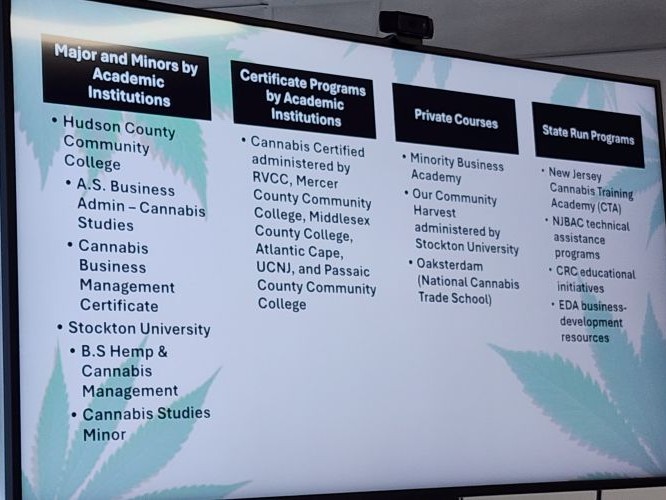
She encouraged licensed companies to utilize the resources.
Trenton noted how important it was to train them on plant tags and records to avoid CRC fines.