





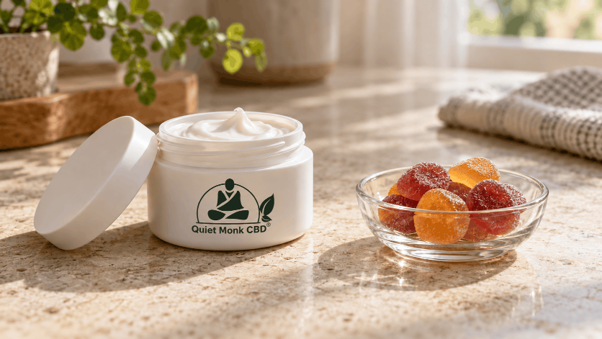
CBD creams and gummies can sit on the same store shelf, but they belong to different routines. Choosing between them starts with what you want to do with the product.
A cream is applied to the skin, often as part of massage or body care. A gummy is swallowed and provides a measured oral serving.
For a shopper looking for something to massage into their shoulders, a cream is the practical format to consider. For someone interested in taking CBD by mouth, gummies offer a different option. Comparing the biggest number on each package will not settle that decision.
The distinction sounds straightforward. Cannabis packaging can make it less obvious, particularly when products emphasize CBD totals without giving equal attention to serving information or directions.

The Same Cannabinoid, Different Products
CBD appears in body creams, lotions, balms, oils, and edibles. Sharing an ingredient does not make those products interchangeable, any more than it makes their labeled amounts directly comparable.
A gummy label may state the CBD content of each piece. A cream label usually states the total throughout the container. Neither number, on its own, tells a consumer what result to expect.
Consider a bottle containing 30 gummies with 25 milligrams of CBD per piece. It contains 750 milligrams altogether. That is useful information for understanding the package, but the amount in one gummy remains 25 milligrams.
A cream containing 3,000 milligrams presents a different calculation. CBD is distributed through the formula, and the amount applied depends on how much cream is used. It would be misleading to describe that jar as equivalent to a certain number of edible servings.

Consumers get a clearer comparison by staying within one category first. Compare the labeled servings of two gummies, or the contents and sizes of two creams. Then consider whether that format suits the intended use.
Where a Cream Fits
A topical offers an external option for people who already use massage or body-care products. Someone who rubs their hands after working outside, or massages their shoulders after sitting at a desk, may find a cream easy to incorporate into that routine.
The useful feature is control over application. A cream can be worked into an area. A gummy cannot be directed to one shoulder or knee.
That does not mean a cream has been shown to treat the underlying cause of discomfort. It describes how the product is used.
Quiet Monk CBD, for example, offers CBD cream options for pain relief in original and cooling varieties, with several labeled strengths. Those choices allow shoppers to compare products within the topical category rather than assuming an edible is the next step.
Practical preferences matter here. A cream kept near the bathroom sink may suit someone who uses it at home. A roll-on may be easier to carry, while a balm stick allows application without scooping product from a jar. The most convenient choice depends on where and how someone plans to use it.
Gummies Have Their Own Appeal
The appeal of a gummy is often its measured serving and simple format. There is no dropper to fill, and the package can identify how much CBD is in each piece.
That convenience still depends on clear labeling. A large number on the front of a bottle may refer to the whole package rather than one gummy. Shoppers need both figures to understand what they are buying.


The other cannabinoids in the formula also matter. A CBD-only gummy differs from one containing CBD and THC, or one combining CBD with another cannabinoid. Two strawberry gummies can look nearly identical while containing different ingredients.
For people taking medicines, choosing an oral CBD product also involves checking possible interactions with a healthcare professional. A familiar candy format does not remove that consideration.
Taste, serving size, and ingredient preferences can then help narrow the selection. Someone avoiding gelatin, for example, may prefer a vegan formula. Another shopper may want a smaller package before committing to a larger bottle. These are useful comparisons once the cannabinoid content is understood.
What the Milligram Total Can—and Cannot—Tell You
CBD totals help describe a product. They do not provide a universal scale for comparing everything in a cannabis shop.

Even two creams with the same total CBD can differ in concentration if their container sizes differ. Likewise, a gummy bottle may contain more CBD overall simply because it holds more pieces, rather than because each gummy contains more.
Price comparisons need the same context. A lower-priced bottle is not necessarily better value if it contains fewer servings. A more expensive cream does not automatically offer a better formula or a better experience.
| What to compare | For creams | For gummies |
| CBD amount | Total CBD alongside container size | CBD per piece and total number of pieces |
| Other cannabinoids | What the formula contains | What each serving contains |
| Intended use | External application directions | Oral serving directions |
| Personal preferences | Application format and ingredients | Flavor, ingredients, and serving size |
This approach keeps the purchase focused on information the label can provide. It also avoids treating a high CBD total as a promise about effectiveness.
CBD on the Label Does Not Explain the THC Content
CBD and THC are different cannabinoids. THC is the main compound responsible for the intoxicating effects associated with cannabis, and some products marketed around CBD also contain it.
A shopper who wants to avoid THC needs more than the word “hemp” on a package. The product description and relevant laboratory report should identify the tested cannabinoid content.
That is especially important when choosing an edible. Consumers should know whether they are buying a CBD-only product or one that includes THC before taking a serving.
Products applied to the skin require another distinction: an ordinary topical should not be treated as interchangeable with a transdermal product. Transdermal products are designed to deliver ingredients through the skin and should be assessed separately.
The category name is a starting point. The individual product’s formulation and directions explain what is being sold.
Buying Both Should Have a Purpose
There is no automatic reason to buy a cream and a gummy together. A shopper may have a use for both, but each should earn its place in the routine.
Someone who wants an external massage product may decide that a cream covers the purchase they came to make. Someone interested in oral CBD may have no need for a topical. Adding another format simply because it is available can turn a straightforward decision into an unnecessary expense.
Starting several products together can also make it harder to identify which one caused an unwanted effect. The Food and Drug Administration (FDA) notes that questions remain about using multiple CBD products in combination.
Consumers do not need an elaborate regimen to make a sensible choice. They need a clear purpose, understandable directions, and enough product information to compare their options.
A More Useful Conversation at the Counter
A good retailer should be able to explain the difference between application formats without relying entirely on promotional language. Basic questions can make that conversation more productive:
- Is this intended for ordinary external application, transdermal use, or oral consumption?
- How much CBD does the listed amount refer to?
- Does the formula contain THC or other cannabinoids?
- Where are the directions and relevant laboratory results?