





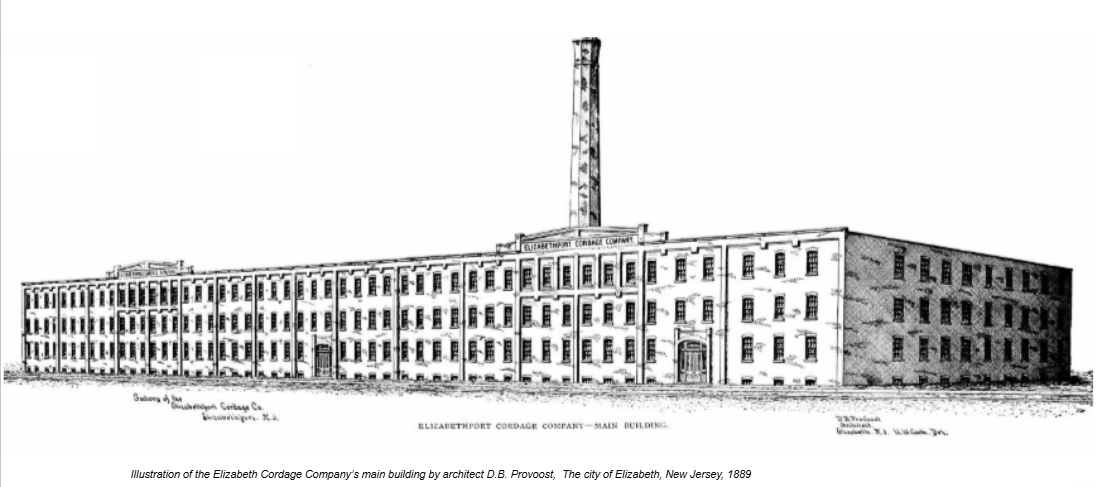
During the nineteenth century’s Gilded Age, Elizabeth in Union County, in North Jersey, was a center of industrial hemp production.
The Elizabeth Cordage Company’s factory on Elizabeth Avenue produced industrial hemp rope, twine, paper, and hemp-based binders.
Industrial hemp was among the many practical everyday items produced in New Jersey during the Industrial Age of the late 19th century. That period of time is being popularized by HBO’s “The Gilded Age,” which is currently airing its 4th season.
Similar to now, great fortunes could be made by businessmen off naturally occurring commodities. Some of them turned into robber barons whose influence needed to be checked.
Elizabeth and Hemp
The Elizabeth Cordage Company was founded in the 1820s. They were formerly on Elizabeth Ave. It was the city’s largest manufacturing company until the sewing manufacturer Singer* built their factory complex in 1871.
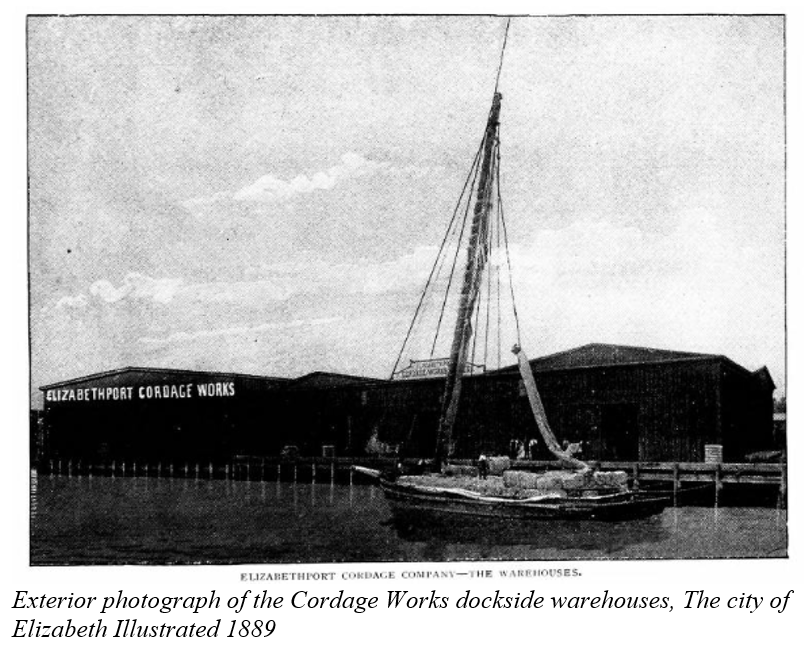
The company’s main factory was located along Elizabeth Avenue. It was about two blocks away from the Elizabeth River. Its proximity to the water and to the railroads owned by Jersey Central gave the Cordage Company easy access to ship their products to a large variety of clients in many places.
The Jersey Central Railroad could take as far as Scranton, PA where the main line terminated and the industrial hemp could be loaded onto trains heading out west.

Unfortunately, parts of the factory caught fire in 1893. It cost two firefighters their lives and injured one more. Afterward, several companies tried to take it over, including the New York Cordage Company. Ownership ended up in the hands of the United States Cordage Company, later called Standard Cordage. Standard Cordage ceased operations in 1912.
Industrial Hemp in the Gilded Age
Hemp was essential to 19th-century life. Hemp-based binders in the 19th century included caulk to seal ships, lime-based plasters, and infill for wooden timber frames of buildings as a wattle and daub.
Hemp twine and rope had numerous uses in the Gilded Age during the nineteenth century. Rope was used aboard ships. It was also used in agriculture and industry. Things had to be hauled, and ropes and pulleys made a good mechanical means to lift and move a lot of heavy machinery. With the waterfront so close by, there were plenty of places that needed rope for one purpose or another.
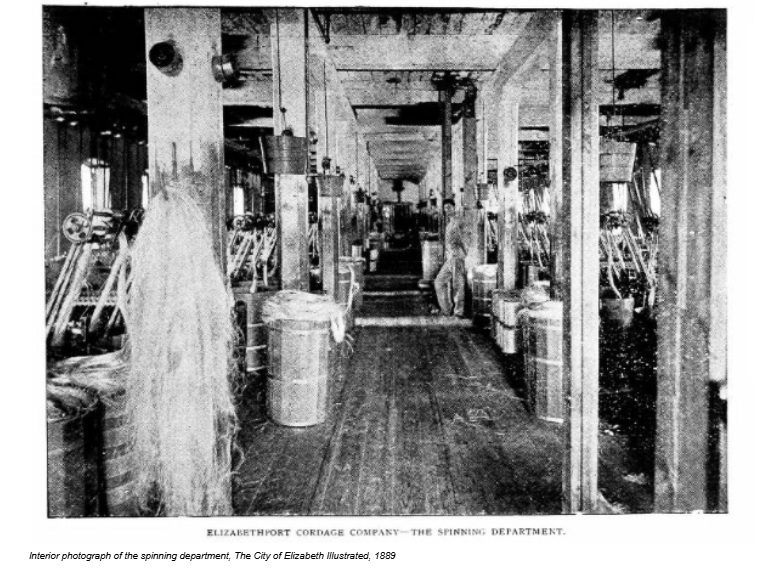
Hemp twine was used for various purposes in the 19th century. That included binding for packages and gifts and holding together bales of hay. In addition, industrial hemp twine was used in fishing or to hold up any object that needed to be suspended.
The kind of hemp used in the Elizabeth factory was often sourced from sisal. Sisal is a type of agave plant thought to originate on the Yucatan Peninsula in Mexico. Sisal is known for its stiff fibers, which were woven into ropes, clothes, canvas, worked into hempcrete and binders, or used for a number of other practical uses. The pith from the leaves is distilled into mezcal.
Industrial Hemp in America
The growth of hemp was mandated in many colonies. In Virginia, for example, it was illegal not to grow hemp. By contrast, in New Jersey, the colonial government would offer rewards to settlers who grew hemp.
The use of hemp declined in the 20th century with the standardization of cotton and synthetic alternatives. In addition, Reefer Madness and the Marihuana Tax Act of 1937 damaged the hemp industry for years. One exception, however, was the drive for hemp in the Second World War, where the government encouraged the growth of hemp for the war effort in a film called Hemp for Victory.
Industrial hemp was given a new breath of life with the legalization of cannabis for medical and adult use.