





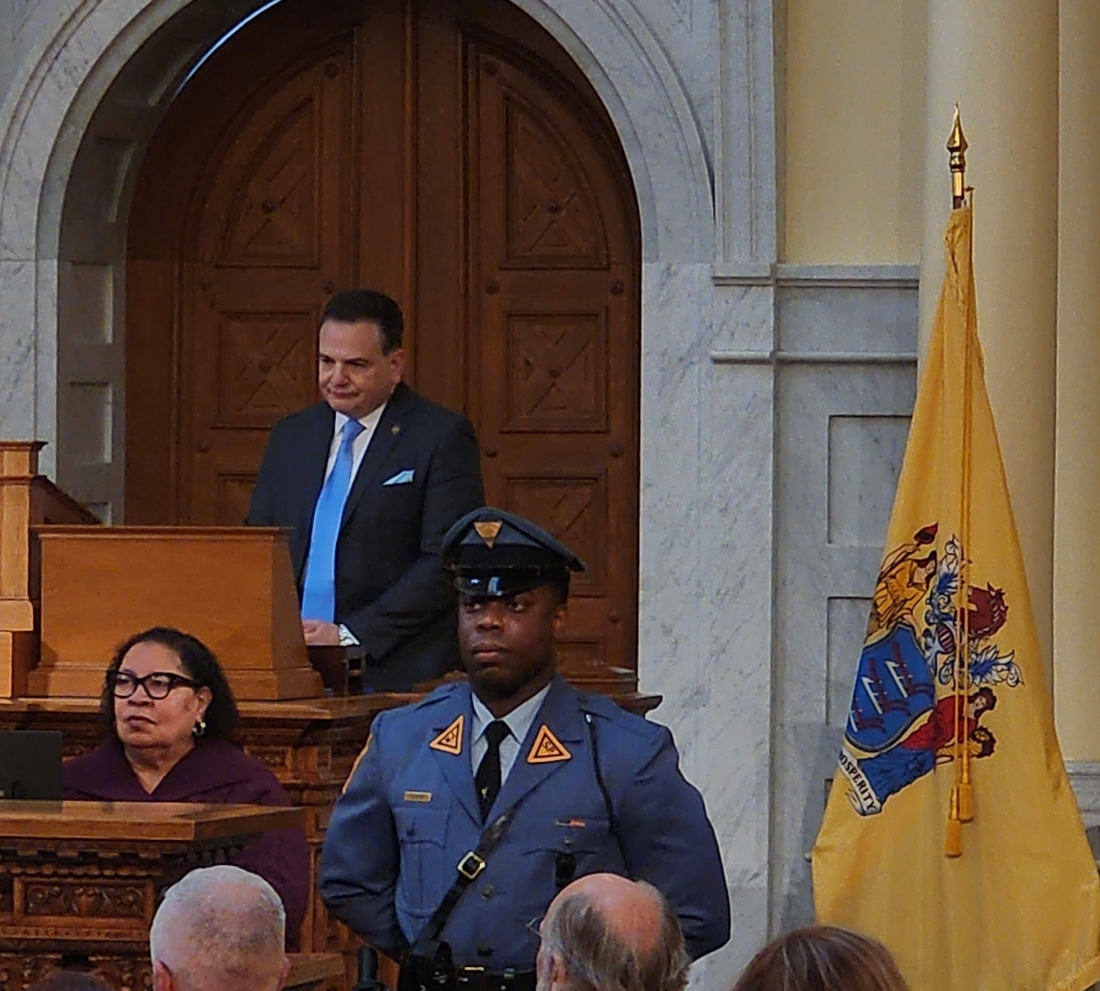
NJ Senate President Nick Scutari (D-22-Union) has introduced bills in the new session of the legislate to arrest underground legacy consumers and foster interstate commerce of cannabis.
Table of Contents
Anti-Underground Legacy Consumer and Operator Bill
Scutari reintroduced a bill S 3171 to make it illegal again to buy underground legacy weed.
“This bill establishes a disorderly persons offense for knowingly purchasing marijuana from a business that is not licensed by the commission. A disorderly persons offense is punishable by a term of imprisonment not to exceed six months, a fine not to exceed $1,000, or both,” it said.
This bill establishes the crime of selling or purchasing marijuana from an unlicensed business. Further, it creates criminal consequences for the “leader of an illegal marijuana business network.”


Also, “an unlicensed entity that sells marijuana is subject to penalties for manufacturing, distributing, or dispensing of illegal controlled dangerous substances,” it says.
“The bill permits the State Police, in conjunction with the Office of the Attorney General, to close any business that violates this bill … and requires the seizure of any marijuana maintained by the business,” it added.
Only Scutari and Anthony Bucco (R-25-Morris) are for it.
At least Bucco is also pro-medical cannabis homegrow legalization, unlike Scutari.


It has no other sponsors or a companion bill, which are signs it could move quickly. But Scutari might be the only sponsor needed to ram a bill through the process quickly before opposition can organize effectively.
It was introduced in the last session as well. But no other sponsors endorsed the NJ Senate version, and it only had 2 sponsors for the Assembly version.
Interstate Cannabis Commerce Bill Introduced
Scutari also introduced a new bill to foster the interstate commerce of cannabis.
S 3151 “permits the Governor to enter into interstate agreements authorizing medicinal or personal-use commercial cannabis activity, or both, between entities licensed in states in which cannabis is licensed.
“Any interstate agreement is required to prohibit the commercial transportation of cannabis by any other means other than what is established in the agreement and also prohibit the transportation of cannabis through any state which does not authorize the transportation of cannabis,” it says.
Also, “any foreign licensee is required to obtain a license from this State and any proper authorization from a local jurisdiction prior to engaging in commercial cannabis activity.”
“Once the agreement is established, a State licensee is permitted to engage in commercial cannabis activity with a holder of a commercial cannabis license issued under the laws of another state.”
For the agreement to become effective, “the bill requires that … federal law is amended to allow for the interstate transfer of cannabis or cannabis products between authorized commercial cannabis businesses.”


Or “federal law is enacted that specifically prohibits the expenditure of federal funds to prevent the interstate transfer of cannabis or cannabis products between authorized commercial cannabis businesses.”
Or “the United States Department of Justice issues an opinion lowering or tolerating the interstate transfer of cannabis products between legal cannabis businesses.”
“Or the US Attorney General issues a written opinion that implementation of agreements will not result in significant legal risk to this State. Based on review of federal judicial decisions and administrative action.”
It concludes saying “the Governor is required to submit the proposal to the Joint Budget Oversight Committee. Which will have 60 days to review the proposed agreement.”


The bill has no other sponsors or a companion version.
Federal Cannabis Market Issues
According to Marijuana Moment, the pro-cannabis states of California, Oregon, and Washington have passed similar agreements.
American states don’t usually sign treaties with each other as if they were independent republics.
Some local independent cannabis operators have noted to Heady NJ that they feel protected rather than harmed by federal marijuana prohibition and the lack of interstate commerce. They believe it likely decreases large corporate competition.
Ideally, with federal cannabis legalization via descheduling, pro-cannabis states could do business with each other and retain local business protections.
The possible rescheduling of marijuana to Schedule III does not help with interstate commerce, among other issues.