




Many cannabis advocates and industry leaders have had mixed feels about President Donald Trump (R) endorsing rescheduling marijuana limited medical and CBD purposes.
Table of Contents
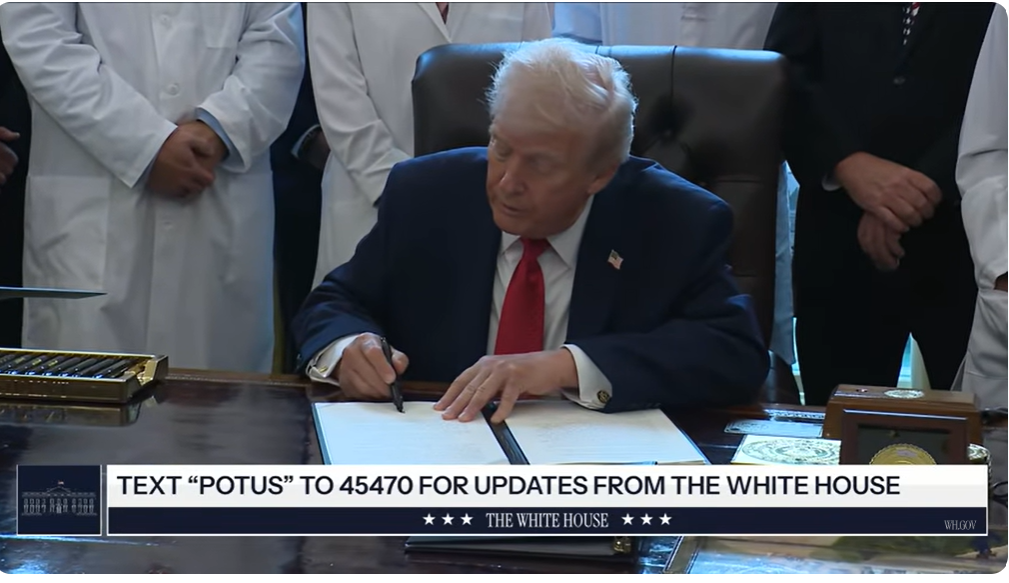
The Executive Order directs the Attorney General to expedite rescheduling marijuana to Schedule III under the Controlled Substances Act. It also instructs the White House to work with Congress on access to full-spectrum CBD products. The order further calls on the Department of Health and Human Services (HHS) to develop research models using real-world evidence to inform standards of care.
Notably, half the Republicans in the US Senate announced they are against any cannabis legalization progress.
The White House’s fact sheet does not note the Order’s impact on state-legal cannabis companies.


Medical Cannabis Advocates React
Some advocates and industry experts are more positive than others. Nearly all described it as a half measure at best. Industry and policy experts have different interpretations of what will happen.
Noted medical cannabis patient advocacy group Americans for Safe Access (ASA), in a release, emphasized that rescheduling corrects a long-standing scientific and policy error. But it does not legalize medical cannabis, integrate state programs into federal healthcare systems, or protect patients from discrimination.
“We commend the President for acknowledging that reality matters. But recognition is not the same as access. And research is not the same as patient protection,” said Steph Sherer, ASA Founder and Executive Director.
She noted Schedule III has several limitations.


“Under Schedule III, patients can still lose housing, employment, or parental rights simply for following a doctor’s recommendation,” Sherer added. “Doctors still cannot issue federally recognized prescriptions for whole-plant cannabis. Medicare, Medicaid, and the VA still cannot cover it.”
“We need federal legislation that creates a national medical cannabis framework, protects patients from discrimination, integrates cannabis into healthcare systems, and ensures safe, regulated access everywhere patients live, work, travel, and heal,” she declared.
Advocate Calls Victory Symbolic Only
“The recently reported intent to reschedule cannabis by executive order marks a symbolic victory and a recalibration of decades of federal misclassification,” Betty Aldworth, Co-Executive Director of MAPS; Chair of The Marijuana Policy Project (MPP) said.
“But symbolism is not structural reform. Rescheduling alone will not untangle the web of barriers facing cannabis consumers and the industry that serves them,” she noted.
Aldworth explained that it would not resolve the dangers of cash-only operations.
“It will not eliminate the risks to cannabis consumers embedded in housing policy, immigration policy, workplace drug testing, or family law. It will not establish the regulatory clarity required for millions of patients to receive insurance coverage when they choose cannabis over pharmaceutical interventions that may offer less benefit or carry greater risk,” she noted.
Aldworth added that federal cannabis legalization is needed to address both social justice and industry issues.
Industry Reaction Focused on Financial Issues Unaddressed
“Rescheduling cannabis to Schedule 3 will deliver immediate, measurable impacts,” said working capital provider FundCanna CEO Adam Stettner.


“Most notably, it eliminates Section 280E from the federal tax equation for licensed operators. A change that, for many, is the difference between treading water and turning a profit,” he argued.
“It also unlocks long-blocked research pathways, enabling rigorous clinical studies, standardized formulations, and a new era of product innovation,” Stettner added.
“Additionally, it has catalyzed a broader shift across the industry. Pushing cannabis businesses to adopt more institutional practices around banking, compliance, financial reporting, and governance,” he claimed.
Former President Joe Biden (D) similarly endorsed Schedule III for marijuana. However, there is a popular bipartisan movement of cannabis advocates and small and large business owners who want descheduling for true federal cannabis legalization.


A hearing trial was held that the Drug Enforcement Administration (DEA) controlled. The process was stopped when Trump took office.